Wild & free

The Animal Kingdom.

Meet the animals of East Africa — the giants, the hunters, the grazers and the birds — with the fun facts, quirks and field notes that make every game drive unforgettable.

The mammals

Giants, hunters & grazers.

There is far more to each animal than meets the eye. Here are the headline species you’ll meet across Tanzania, Kenya, Uganda and Zanzibar — and what makes each one remarkable.

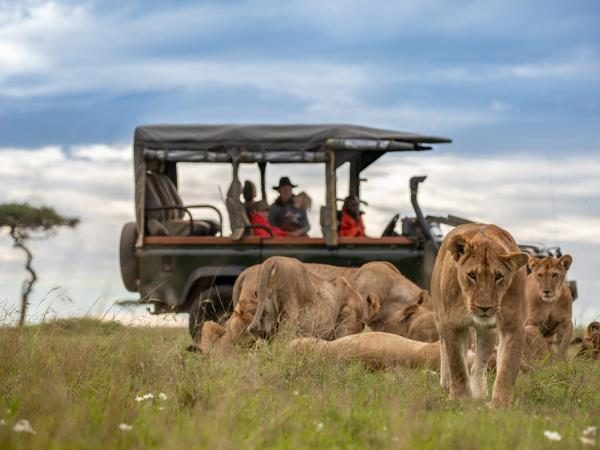
Lion Lion

The only truly social cat — living in prides of up to 30.

Fun facts
  • A lion’s roar can be heard up to 8 km away.
  • They rest up to 20 hours a day.
  • Cubs are born with faint spots that fade as they grow.
♂ Male vs ♀ female

Males grow a mane — the darker it is, the older and stronger the lion — and are ~50% heavier. Females are the pride’s hunters, working in teams.

Where to see them

Serengeti, Ngorongoro, Masai Mara, Tarangire.

African Elephant African Elephant

The largest land animal on earth.

Fun facts
  • They talk in infrasound — rumbles too low for humans to hear.
  • A trunk has around 40,000 muscles.
  • They can smell water from kilometres away.
♂ Male vs ♀ female

Bulls are far larger with thicker tusks and roam alone or in bachelor groups. Herds are led by the oldest, wisest female — the matriarch.

Where to see them

Tarangire, Amboseli, Serengeti, Nyerere.

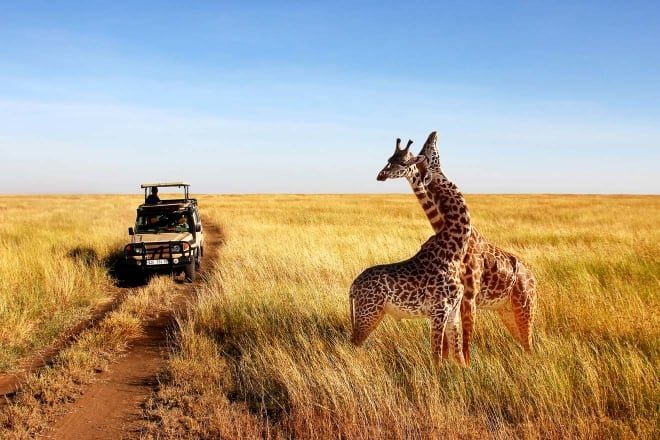
Giraffe Giraffe

The neck is the least interesting part.

Fun facts
  • The tongue is ~50 cm long, prehensile and dark blue-black for UV protection.
  • The “horns” (ossicones) are ossified cartilage — old males can grow up to five.
  • The recurrent laryngeal nerve travels ~5 m to make a 2 cm connection — a quirk inherited from fish ancestors.
  • Giraffes sleep only ~30 minutes a day, in 4–5 minute bursts.
♂ Male vs ♀ female

Bulls are taller and darker with thicker ossicones, and “neck” — swinging their heads like clubs in dominance fights. Sexual selection may drive their necks as much as feeding does.

Where to see them

Serengeti, Tarangire, Masai Mara, Nairobi NP.

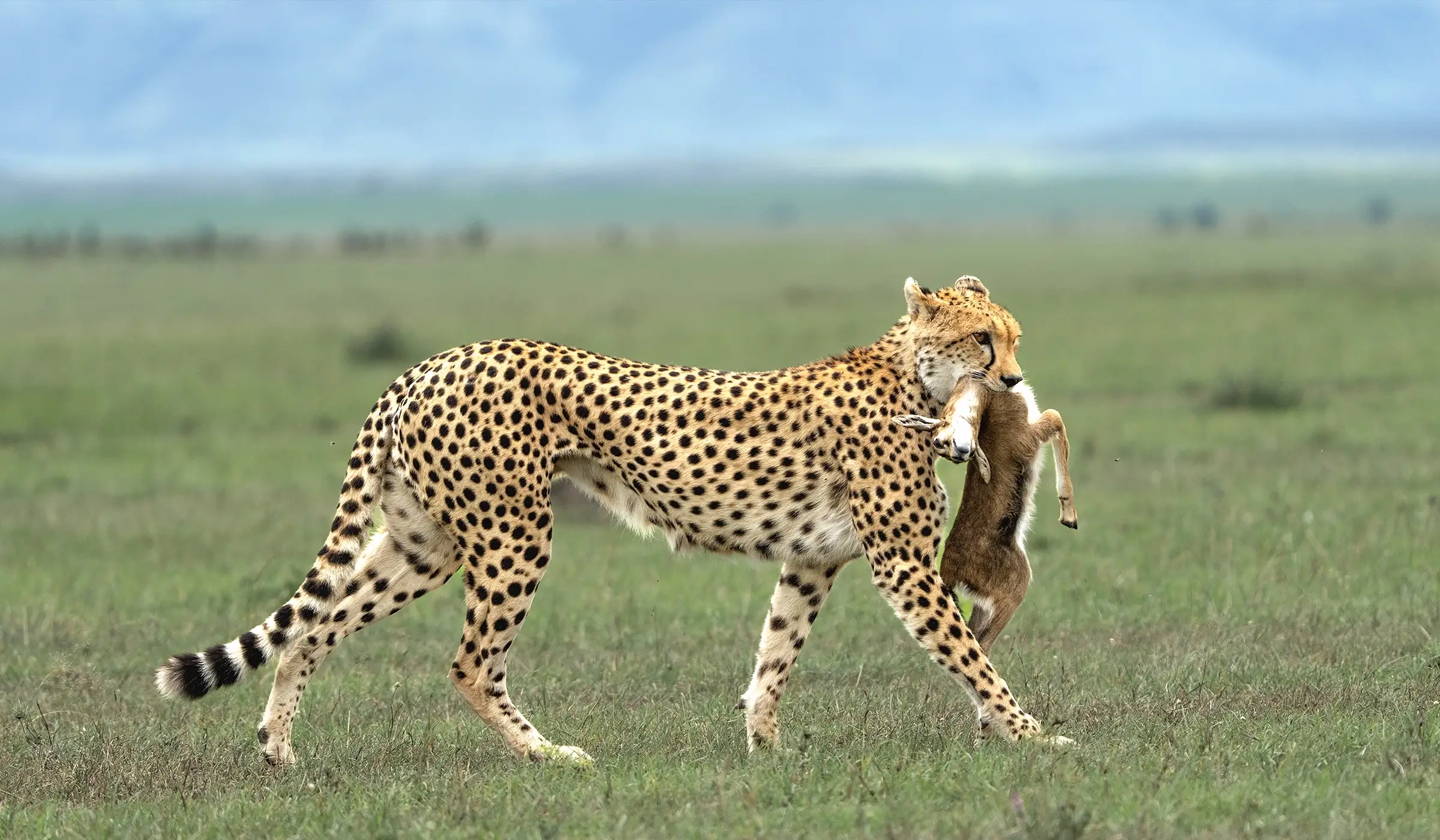
Cheetah Cheetah

The fastest land animal — 0 to 100 km/h in three seconds.

Fun facts
  • Top speed ~110 km/h, but only for about 30 seconds.
  • Semi-retractable claws grip the ground like running spikes.
  • Black “tear marks” cut sun glare, like an athlete’s eye-black.
♂ Male vs ♀ female

Males are slightly larger and often form small “coalitions” of brothers; females are solitary and raise cubs entirely alone.

Where to see them

Serengeti, Masai Mara — open, short-grass plains.

Leopard

The most elusive big cat — a master of stealth.

Fun facts
  • Strong enough to haul prey heavier than itself up a tree.
  • Every rosette pattern is unique, like a fingerprint.
  • Largely nocturnal and solitary.
♂ Male vs ♀ female

Males are up to 50% heavier with broader heads; both sexes are solitary except when mating.

Where to see them

Serengeti, Ngorongoro, Nyerere, Masai Mara.

Black Rhino

A prehistoric heavyweight — and critically endangered.

Fun facts
  • The horn is keratin — the same material as your fingernails.
  • Very near-sighted, but with superb smell and hearing.
  • Can charge at around 55 km/h.
♂ Male vs ♀ female

Bulls are territorial and mostly solitary; cows are usually seen with a single calf.

Where to see them

Ngorongoro Crater; rarely, the Serengeti.

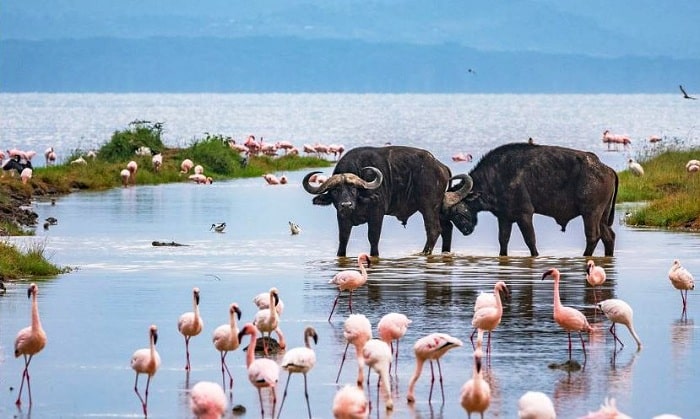
Cape Buffalo

One of the “Big Five” — and famously unpredictable.

Fun facts
  • Herds can number well over a thousand.
  • Fused horn bases form a “boss” like a helmet.
  • They remember threats and defend the herd together.
♂ Male vs ♀ female

Bulls are larger and darker with a heavy horn boss; old solitary bulls are known as “dagga boys”.

Where to see them

Serengeti, Ngorongoro, Nyerere, Masai Mara.

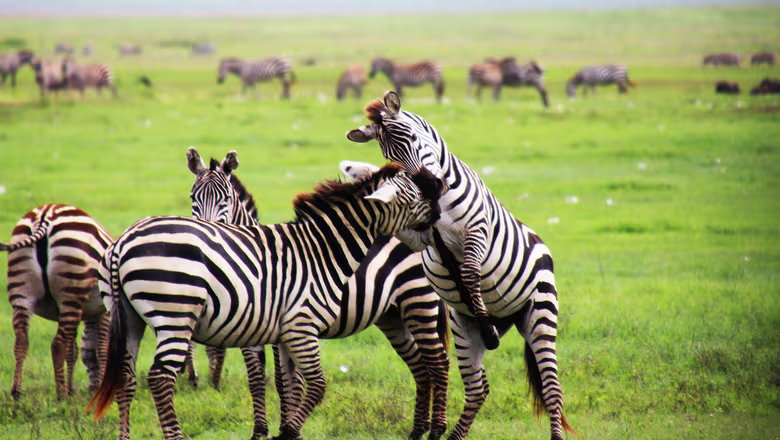
Plains Zebra Plains Zebra

No two zebras share the same stripe pattern.

Fun facts
  • Stripes may dazzle predators and deter biting flies.
  • Foals can stand and run within an hour of birth.
  • They migrate alongside wildebeest for safety in numbers.
♂ Male vs ♀ female

Stallions are slightly larger and defend a harem of mares; family groups stay together for years.

Where to see them

Serengeti, Ngorongoro, Masai Mara.

Hippopotamus

Africa’s most dangerous large land animal.

Fun facts
  • They can’t really swim — they walk and bounce along riverbeds.
  • They secrete a red “blood sweat” that works as sunscreen.
  • They spend up to 16 hours a day in water.
♂ Male vs ♀ female

Bulls are larger and fiercely territorial over stretches of water; cows gather in “pods” with their calves.

Where to see them

Serengeti (Retina pool), Rufiji/Nyerere, Lake Manyara.

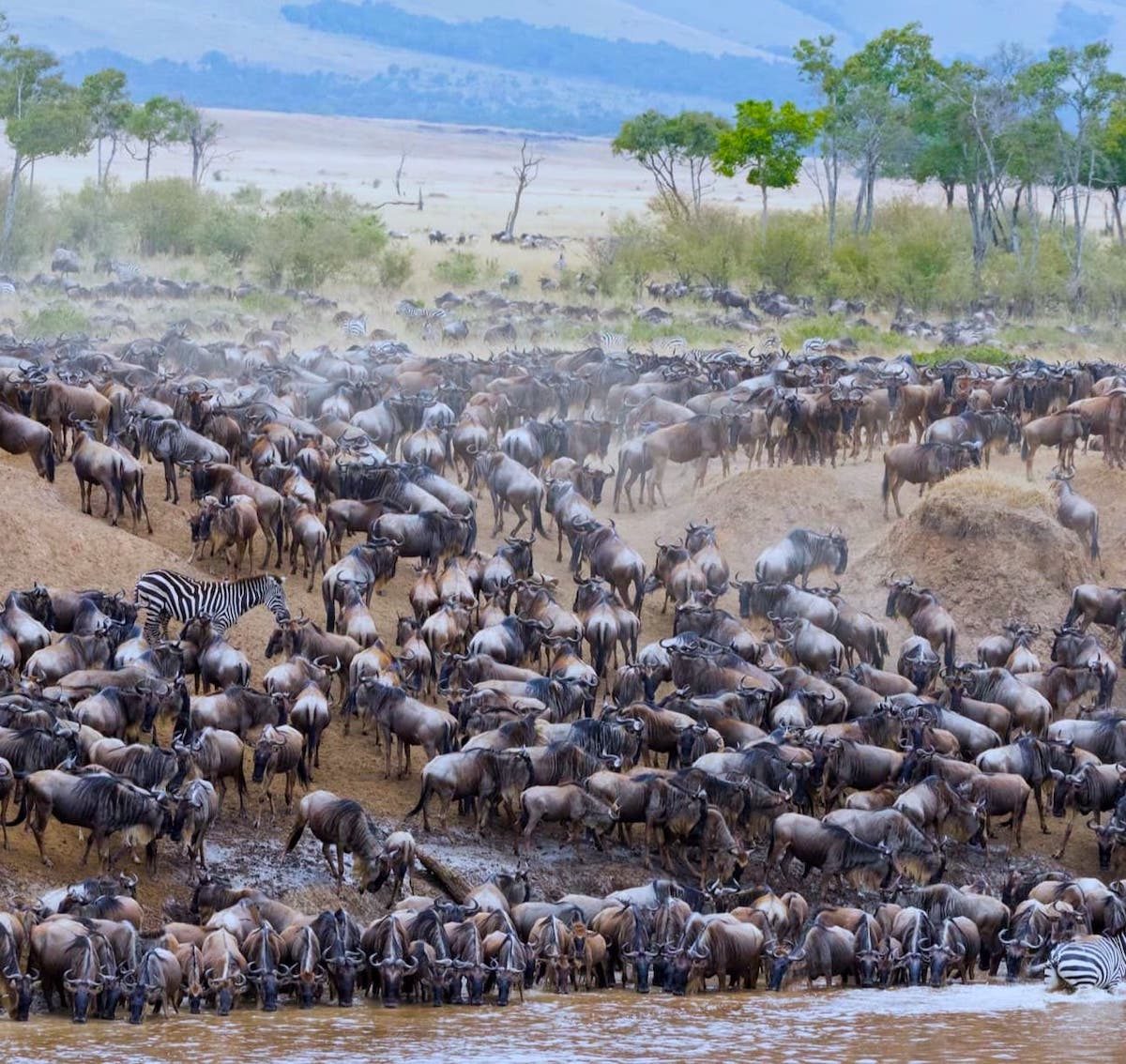
Wildebeest Wildebeest

Star of the Great Migration — 1.5 million strong.

Fun facts
  • Up to 8,000 calves can be born on a single day in the calving season.
  • A calf can run within minutes of being born.
  • They follow the rains across more than 1,000 km each year.
♂ Male vs ♀ female

Bulls turn territorial during the rut and are slightly larger; both sexes carry curved horns.

Where to see them

Serengeti–Masai Mara ecosystem, Ngorongoro.

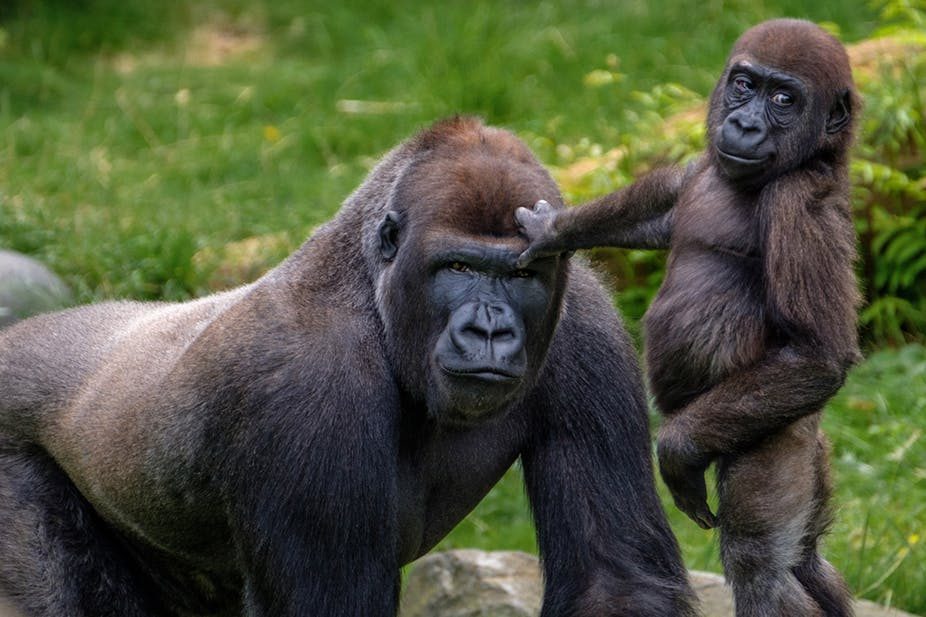
Mountain Gorilla Mountain Gorilla

Our gentle cousins — sharing about 98% of our DNA.

Fun facts
  • Only around 1,000 remain, in Uganda, Rwanda and DR Congo.
  • Each gorilla’s nose print is unique, like a fingerprint.
  • Groups are led by a dominant “silverback”.
♂ Male vs ♀ female

Mature males grow a silver “saddle” of back hair (silverbacks) and are nearly twice the size of females.

Where to see them

Bwindi Impenetrable Forest & Mgahinga (Uganda).

On the wing

The birds.

East Africa is a birdwatcher’s paradise — over 1,000 species. Here are a few unmistakable ones to look for.

Ostrich

The world’s largest bird — and fastest on two legs.

Fun facts
  • It can sprint at up to 70 km/h.
  • A single kick can kill a lion.
  • It lays the largest egg of any living bird.
♂ Male vs ♀ female

Males are bold black-and-white; females are plain grey-brown for camouflage on the nest.

Where to see them

Serengeti, Ngorongoro, Masai Mara.

Greater Flamingo Greater Flamingo

Pink from the food they eat — algae and tiny shrimp.

Fun facts
  • They gather in the hundreds of thousands on Rift Valley soda lakes.
  • They feed with their heads upside-down in the water.
  • Chicks are born grey and turn pink over years.
♂ Male vs ♀ female

Males and females look alike; males are simply a little taller.

Where to see them

Lake Manyara, Lake Nakuru, Lake Natron.

Lilac-breasted Roller

A rainbow of up to eight colours — a safari favourite.

Fun facts
  • Named for its acrobatic “rolling” courtship dives.
  • Often perches in the open on a bare branch.
  • Widely called Kenya’s unofficial national bird.
♂ Male vs ♀ female

Males and females look almost identical — both are dazzling.

Where to see them

Serengeti, Masai Mara, Tarangire.

African Fish Eagle

Its ringing call is often called “the voice of Africa”.

Fun facts
  • It snatches fish straight off the water’s surface.
  • Its cry carries for kilometres across a lake.
  • Pairs mate for life and reuse the same nest.
♂ Male vs ♀ female

Females are noticeably larger than males — common among birds of prey.

Where to see them

Rufiji River (Nyerere), Rift Valley lakes.

Secretary Bird

A bird of prey that hunts on foot — stamping snakes to death.

Fun facts
  • It can strike with the force of five times its body weight.
  • Named for the quill-like crest behind its head.
  • It walks up to 30 km a day hunting.
♂ Male vs ♀ female

Males and females look similar; males have slightly longer crest and tail feathers.

Where to see them

Serengeti, Ngorongoro, open grasslands.

See them in the wild.

Let our Tanzanian guides put you in the right place at the right time — from the Great Migration to a silverback in the mist.

Plan your safari
Ongea nasi
Safari Loop gallery